IMPORTANT:
Due to current events at UNLV regarding COVID-19 this confernce is currently asking potential participants to delay purchasing tickets. Our goal is to provide a safe, educational, and transformative experience where the wellbeing and health of our participants comes first. To that end we will be monitoring the situation closely and make a final decision regarding this event in the coming weeks. We will keep you updated and provide further instructions as more information becomes available. Thank you for your patience, feel free to reach out to Kenny or Tina with any questions or concerns.About The Program
The Teaching Experience
One of the benefits of this program is the ability to connect with teachers, students, and families for a meaningful professional development experience. Once accepted each participant will complete a teaching profile to highlight your experiences and interests. This profile will be used to match participants with a Chilean classroom teacher. Prior to the start of the conference experience participants and their Chilean host teachers will have the opportunity to connect via email, FaceTime, Skype and other means to share ideas and plan a little for the time. During the experience mutual shared professional knowledge is the orientation and we provide professional development for both groups. Each participant will be certified as having completed 120 hours of professional development through continuing educational units..
The Host Families
The host family matching process works similarly to the teacher matching. Participants will complete a host family profile providing information about themselves. Families from the school are invited to come look through the profiles and each family hand picks the participant they want to host. This selection is based on some aspect of the profile that is a good match for the host family. During our time we are members of the host family. The goal is to speak as much English as possible with the host children who have been learning English in school and to incorporate yourself into the daily life of the family. The generosity of the host families allows us to keep the cost of this program as low as possible – as a result our obligation is to be incorporated with the families. We will do group interactions during the day and there will be opportunities for group bonding during the school day but afternoons and weekends are to be spent with the host families.
The People Involved
Dr. Kenneth Varner
Dr. Kenneth Fasching-Varner joined the UNLV College of Education as an associate professor of literacy education in 2019. His areas of scholarly expertise and interest center on the intersections of identity and difference in globalized contexts, with attention to the language and literacy practices of individuals and communities. Varner examines the nature of White Racial Identity (WRI), Critical Race Theory (CRT), and Culturally Relevant Pedagogy as well as the role of international education, neoliberalism, and educational foundations within global language and literacy contexts. He is the author of over 70 publications including articles in Teacher’s College Record, Educational Foundations, Democracy in Education, and Social Identities: Journal for the Studies of Race, Nation, and Culture among others, and has edited or authored 13 books related to these areas of expertise. Varner studied Language, Literacy, and Culture with a focus on Critical Race Theory and Culturally Relevant Pedagogy at The Ohio State University in Columbus Ohio.
Dr. Tina Vo
Tina Vo earned a PhD from the University of Nebraska- Lincoln focused on science education and technology. Dr. Vo specializes in supporting elementary (K-8) teachers and students to engage in science practices (e.g., asking questions, using models, thinking computationally). As a former middle school teacher, she believes in developing collaborative spaces for teachers and preservice teachers to develop and support critical thinking, encourage the consumption and implementation of relevant information, and personal reflection on learning. To that end, current research focuses include making and modeling towards solving community problems, preparing elementary science teachers for 21st-century classrooms, and the role of epistemological considerations in classroom negotiations. Other research interests include games and simulations tied to scientific modeling, technology integration to support science in elementary contexts, and professional development supporting elementary teachers’ engagement with science and educational geology.
Two Locations
Concepción
Saturday May 16th – June 5th 2020
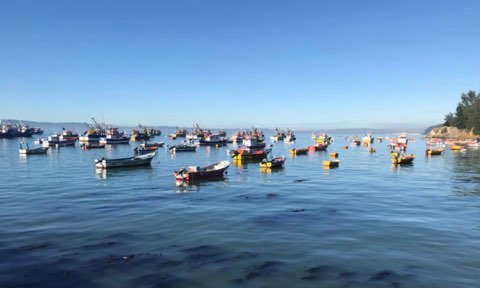
Working with Colegio Concepción San Pedro – a PreK-12 school with an English focus – you will be paired with partner Chilean educators for the three weeks. During the school day you have the opportunity to engage in a variety of educational, instructional, and professional interactions both with Chilean and US counterparts. Afternoons, evenings, and weekends are spent with your host families from the school where you have the opportunity to live Chilean culture from the inside out. The landscape of Concepción and San Pedro line the Pacific coast of southern central Chile. The program is an excellent opportunity to develop as a professional through an experience abroad.
Santiago
June 6th 2020 through Friday, June 26th 2020
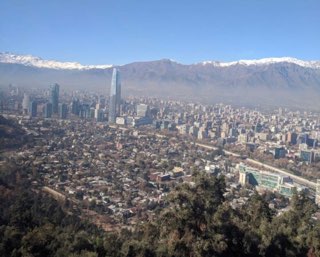
In Santiago we work with the Southern Cross – a PreK-12 bilingual school – you will be paired with partner Chilean educators for the three weeks. During the school day you have the opportunity to engage in a variety of educational, instructional, and professional interactions both with Chilean and US counterparts. Afternoons, evenings, and weekends are spent with your host families from the school where you have the opportunity to live Chilean culture from the inside out. Santiago is a modern city with a beautiful urban landscape coupled with access to the hear of Chilean cultural and social life. The program is an excellent opportunity to develop as a professional through an experience abroad.
Frequently Asked Questions
Who should attend?
This professional development conference is perfect for in-service or pre-service teachers interested in gaining international education experience. We work with students from Pre-K through 12th grade. Conference participants work directly with a Chilean counterpart teacher in PreK-12 English, Math, Science, Social Studies, Physical Education, Art, Music, or various combinations of those grade levels and subject matters. We also provide opportunities for school counselors administrators, librarians and other school personnel. Over three weeks, the conference provides 120 hours of professional engagement. Because the school partners are English focused participants gain significant experience with bi-/multi-lingual English learners. Conference attendees live with host families from the school amplifying the authenticity of the cultural engagement.
Do I need to know a second language to participate?
No, the Chilean families and the school want their students to experience being with English speakers during the conference so that both students and parents engage the cultural exchange supported by English. Spanish speakers are more than welcome and we can ensure you have experiences to use Spanish and English, but only knowledge and ability to use English are required.
Are continuing education credits offered?
Yes. This conference provides pathways for professional development hours as well as potentially earning UNLV credit after the experience. UNLV provides a certificate validating your experience which can be used for CEUs (Continuing Education Units) or their equivalent depending on the regulations in your locality. Please consult your local authorities for how those hours may be applied in your context to allow us to support you.
What is included in the registration fee?
The registration fee includes room and board during the experience (breakfast and dinner during the week and all three meals on weekends are with your host family; lunch is provided Monday through Friday at the school), professional development sessions, materials for the experience, a fleece jacket, as well as health and emergency insurance and any program related expenses.
You are responsible for your own airfare, spending money, and any additional travel you complete outside of the experience dates.
What are the payment options?
After your $500 non-refundable deposit, you are able to make as many partial payments (minimum of $50 a time) through the registration portal. Your final balance is due ten days before departure.
Do I have to buy my ticket?
Yes. We encourage you to familiarize yourself with airfares before purchasing. There is an ebb and flow to airfares and you should spend time understanding the high and low prices to make an informed choice about flights.
When should I purchase airfare?
We will provide you with the go ahead date to begin purchasing tickets and you can purchase any time after that. Flight prices vary depending on the number of layovers, airlines, etc. Program faculty provide you with information to help you as you search, and are available via email to help with questions you may have. It is important that you arrive on Saturday, ________ in _______. If you arrive earlier, be ready on ______ connect with your family at the ______ airport which will be our meeting spot. While the program ends on _______, you are welcome to explore Chile or anywhere else on your own time. We can help you with hotel plans should you wish to arrive in Chile prior to the start or should you want to stay longer in Chile or Argentina. If you have questions about hotels, we will make a list of recommended hotels available electronically. The airport code for _______ is _____.
Do I need insurance?
Health and emergency insurance is provided as part of registration. You may wish to supplement the insurance.
Do I need a passport?
Yes. If you are a U.S. Citizen, No VISA is required. If you are a citizen of another country, please check requirements. For those carrying a U.S. passport, your document MUST be valid for six months past your return date, per U.S. law. If you desire to go to Brazil, please note you need a VISA, which takes some time. Peru requires an entrance fee to those with U.S. Passports.
How safe is Chile generally, and ______in particular?
Chile generally is an extremely safe country. ______ is a large city, and like any large city one should take precautions to safeguard personal belongings. The families are all vetted and have the confidence of the both the partner school and UNLV. _______ is a safe, clean, and modern city. With normal precautions most people feel extremely safe. Less violent crime is committed in Chile per capita than in many parts of the United States. As in any location, crime can occur. The news has depicted recent civil unrest, though this unrest is contained to particular sectors within the major cities and does not impact the locations of our program. Staying with your family and making responsible choices based on common-sense precautions is the best prevention for crime.
How will I be placed with a host family?
After being accepted to attend the conference, you will be asked to submit a profile that includes basic biographical information (i.e. information about allergies and preferences) as well as a narrative and photo. Working with our partners, families from their school are invited to view the profiles and select the conference attendee that is a good fit for their home. Families will be identified no later than one week before the start of the conference; the goal is to provide host family contact as soon as possible for relationship building to take place.
Is transportation provided in Chile?
Each host family will pick up their conference attendee at the airport and return her/him to the airport at the end. You will take the mode of transportation of the children to and from school each day (some ride buses, some in private cars, etc.). Outside of school time will be spent with the families and you will use transportation that the family uses.
What should I bring with me?
We suggest packing light; laundry is available in the homes. Chileans tend not to change their clothes as much as those in the U.S. During the school day you should dress comfortably and in business casual (jeans are acceptable). Most airlines allow 50 lbs of free baggage abroad. We suggest packing no more than 30 lbs in your suitcase to ensure you have room to purchase souvenirs and to place any materials you acquire on the trip. Hair care equipment (such as dryers and flat irons) is prohibited due to the electric system in South America; using equipment from the U.S., even with a transformer, can explode, catch fire, or short circuits. Most homes have curling irons, blowdryers, etc. and they are available cheaply in Chile. Hygiene products found in the U.S. are available in Chile for similar prices so there is no need to bring those things along.
How much spending money should I bring with me?
Spending money is personal. Day-to-day costs of room and board are covered in the conference fee. Attendees often want to shop and buy souvenirs. We say most people would be fine with $50-$100 a week of spending money. ATMs are the safest and most efficient way to access cash while on the trip. Credit Cards are accepted at most locations, though small shops may only take cash. Credit Card and Debit Card safety is very high in Chile.
What happens should I need to cancel my registration?
You may cancel your registration at any time. Payments made for the trip are non- refundable.
Will there be any orientation meetings before departure?
Yes. There will be two pre-departure meetings for registered attendees to help prepare for the experience. If participants are not in the Las Vegas area for those meeting dates, a Google Hangout link will be provided.
Photographs From Past Trips

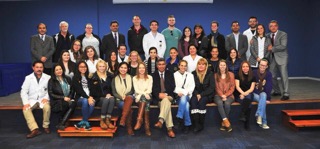


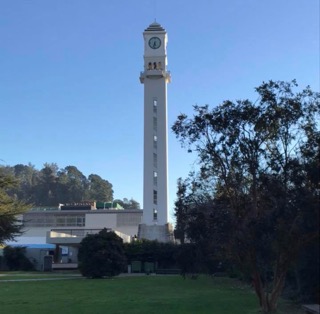
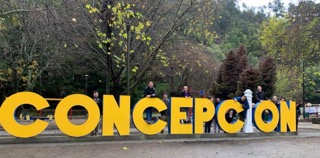


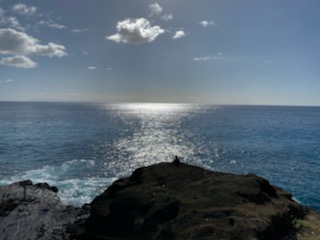

Registration Fees
Conference Registration fee per conference is $1,500The registration fee includes:
- room and board facilitated with a host family
- professional development sessions
- materials for the experience
- fleece jacket
- health and emergency insurance
- your own airfare
- spending money
- any additional travel you complete outside of the experience dates
If you have any questions or require additional information please contact Dr. Varner using the phone number or email provided below.
PHONE: 702-895-3860
EMAIL: kenny.varner@unlv.edu